
High-performance pageant coaching, shared weekly. Trusted by 350+ titleholders in Miss Universe, Miss USA, Miss America, and beyond. This isn’t theory. It’s what works. Start your journey for free:
I sat down with Thom Brodeur, CEO of the Miss USA Organization, in early April 2026 to get all your questions answered.
Here’s the TL;DR.
1. How is marketability judged?
Marketability is now a formal scoring category at the national level, and that changes the game.
You are no longer just being evaluated as a contestant. You are being evaluated as a brand ambassador. That means how you photograph, how you present on camera, how you communicate, and how people respond to you all matter.
Follower count is not the metric. Engagement is.
“It isn’t about the number of followers… it’s about the engagement.”
What does that actually mean? If you have 5,000 followers and they actively comment, share, and engage with you, that is more valuable than 50,000 passive followers. Brands care about influence, not reach.
So your job is simple: become someone people pay attention to, not someone who just looks good in a post.
2. What’s the best way to prepare for a state pageant?
Prepare holistically.
Most contestants over-invest in appearance and under-invest in capacity. They’ll spend thousands on wardrobe, hair, and makeup, but neglect sleep, nutrition, stress management, and mental clarity.
That’s a mistake.
If you are physically drained, mentally scattered, or emotionally unstable, it will show under pressure. Interview exposes it. Stage presence exposes it.
You are not just preparing a look. You are preparing a performer.
The contestants who win are the ones who feel grounded, not just polished.
3. Will contestants ever see their scores?
Expect movement toward transparency.
There is a clear push toward live or visible scoring, which would remove a lot of the confusion and speculation that happens after competitions. When scores are hidden, people fill in the gaps with assumptions.
Transparency fixes that.
The trade-off is emotional. Seeing a low score in real time can be uncomfortable. Some contestants will fixate on one judge instead of looking at the broader picture.
But the direction is clear: more visibility, less ambiguity.
4. What stands out in an open call video?
Be real.
Do not over-rehearse. Do not oversell polish. Do not deliver a scripted, pageant-perfect version of yourself.
“Just tell us who you are and why we should care.”
The mistake most people make is trying to impress. They think this is about saying the “right” thing.
It’s not.
It’s about being clear, grounded, and human enough that someone watching feels something. If it feels rehearsed, it creates distance. If it feels real, it creates connection.
Connection wins.
5. What is open casting?
Open casting is not a backup plan. It is a legitimate entry point.
It exists to fill states without active directors, which means it can open doors that would not otherwise exist. In some cases, it is the only pathway into the system.
Treat it seriously.
The standard is not lower. The process is simply different.
6. How important is production quality in your video?
It isn’t.
Production value is not scored. That means you do not need a videographer, a production team, or a cinematic edit.
What you need is clarity.
Do you look like yourself? Can we hear you? Do we understand you? Do we feel like we’re meeting a real person?
That’s it.
If anything, overproduction can work against you because it signals performance over authenticity.
7. How important is social media?
Social media is your modern business card.
It’s not about volume. It’s about signal.
If someone lands on your profile, they should understand who you are, what you care about, and what makes you different within seconds. If your content is generic, filtered, or interchangeable, it tells us nothing.
If it’s specific, personal, and consistent, it tells us everything.
Use it to build familiarity and trust, not just visibility.
8. Why are state dates delayed?
The system is in transition.
Leadership is stabilizing the structure, and state directors are operating under temporary agreements. Some are moving forward quickly. Others are taking more time to decide.
That creates inconsistency.
As a contestant, this means one thing: control what you can control. Timing may vary, but preparation should not.
9. What are the open casting eligibility rules?
For open casting states, residency is not required.
This is important because it removes a traditional barrier. You are no longer limited by geography in those cases.
Apply based on opportunity, not location.
10. Will eligibility rules be standardized?
Yes, but not yet.
2026 is a transition year. Expect more consistency and structure in 2027 once legal and operational issues are fully resolved.
For now, expect variation.
11. Will returning contestants or fast-track events be introduced?
Possibly.
There is openness to new formats, including returning contestants and fast-track style opportunities. But the broader strategy is not about copying other systems.
It’s about expanding the ecosystem.
That means more ways to engage, more ways to compete, and more ways to be seen.
12. Will there be more reality or behind-the-scenes content?
Yes.
The brand is moving toward an always-on model. That means audiences will follow contestants before, during, and after the pageant.
Think less “one-night event” and more “ongoing story.”
That benefits contestants who can show personality, growth, and consistency over time.
13. How important is community impact?
Very.
You are expected to demonstrate real impact, not just talk about it. That means specific actions, real involvement, and measurable contribution.
At the Miss level, this aligns with the “Beyond the Crown” framework at Miss Universe.
If your advocacy feels generic, it won’t land.
If it feels lived-in, it will.
14. How much freedom do titleholders have in shaping their reign?
A lot.
Your advocacy should be yours, not assigned to you.
“It is more important… that what matters to them is a centerpiece.”
When you care about something deeply, you show up differently. You speak differently. You commit differently.
That’s the difference between performative impact and real impact.
15. How will Miss USA prepare for Miss Universe?
With time.
The previous cycle allowed only days between crowning and international competition. That is not preparation, that is survival.
This cycle allows months.
That means better branding, better training, better positioning, and a stronger overall presentation on the global stage.
16. Will Miss USA return to television?
Yes.
This matters more than people think. Distribution shapes perception.
Television brings visibility, legitimacy, and reach. It also raises expectations around production and presentation.
17. How should contestants approach AI?
Use AI to enhance. Do not use it to replace.
Do not generate your identity. Do not create a version of yourself that doesn’t exist.
“It’s meant to make something already good, better. It’s not to take something from zero to 60.”
If you walk into a room and don’t match your images, you’ve already lost trust.
18. Will there be additional national titles?
The long-term vision includes larger events that may crown multiple titles. This is common globally and likely to be adopted here.
Expect expansion, not contraction.
19. Can a titleholder be a mother?
Yes.
This is not theoretical. It is expected to happen.
If judges choose a mother, she will be supported. The system is not designed to exclude based on life stage.
Do not disqualify yourself before the judges ever get the chance to decide.
20. Will interview footage ever be shared?
Possibly, in limited ways.
There is openness to giving contestants more visibility into their own interviews and potentially sharing more of that process publicly.
That would create a stronger feedback loop and better learning environment.
21. What is the future vision for Miss USA?
Put the contestant back at the center.
Everything flows from that. Experience, visibility, opportunity, and impact all stem from prioritizing the contestant as the core of the brand.
If the contestant wins, the brand wins.
22. What pressures come with leading Miss USA?
Scrutiny. Skepticism. Expectation.
The brand is rebuilding trust, and that means every decision is watched closely. Not everyone will believe in the direction immediately.
Operate anyway.
23. What is the defining trait of a modern Miss USA?
Relatability.
Not perfection. Not distance. Not untouchability.
Be someone people can connect with, understand, and see themselves in.
24. What advice applies to open title applicants?
Prepare the same way you would for a state pageant. The standard does not drop just because the pathway is different.
25. Is there room for different body types?
Yes. The direction is broader, more inclusive, and less tied to a single aesthetic standard. Do not try to force yourself into a mold that no longer defines success.
Final Thought
Most contestants are still preparing for the pageant the way it used to be judged.
That’s the gap.
If you take anything from this, take this:
Be real.
Be prepared.
Be someone people can connect with.
Everything else is secondary.
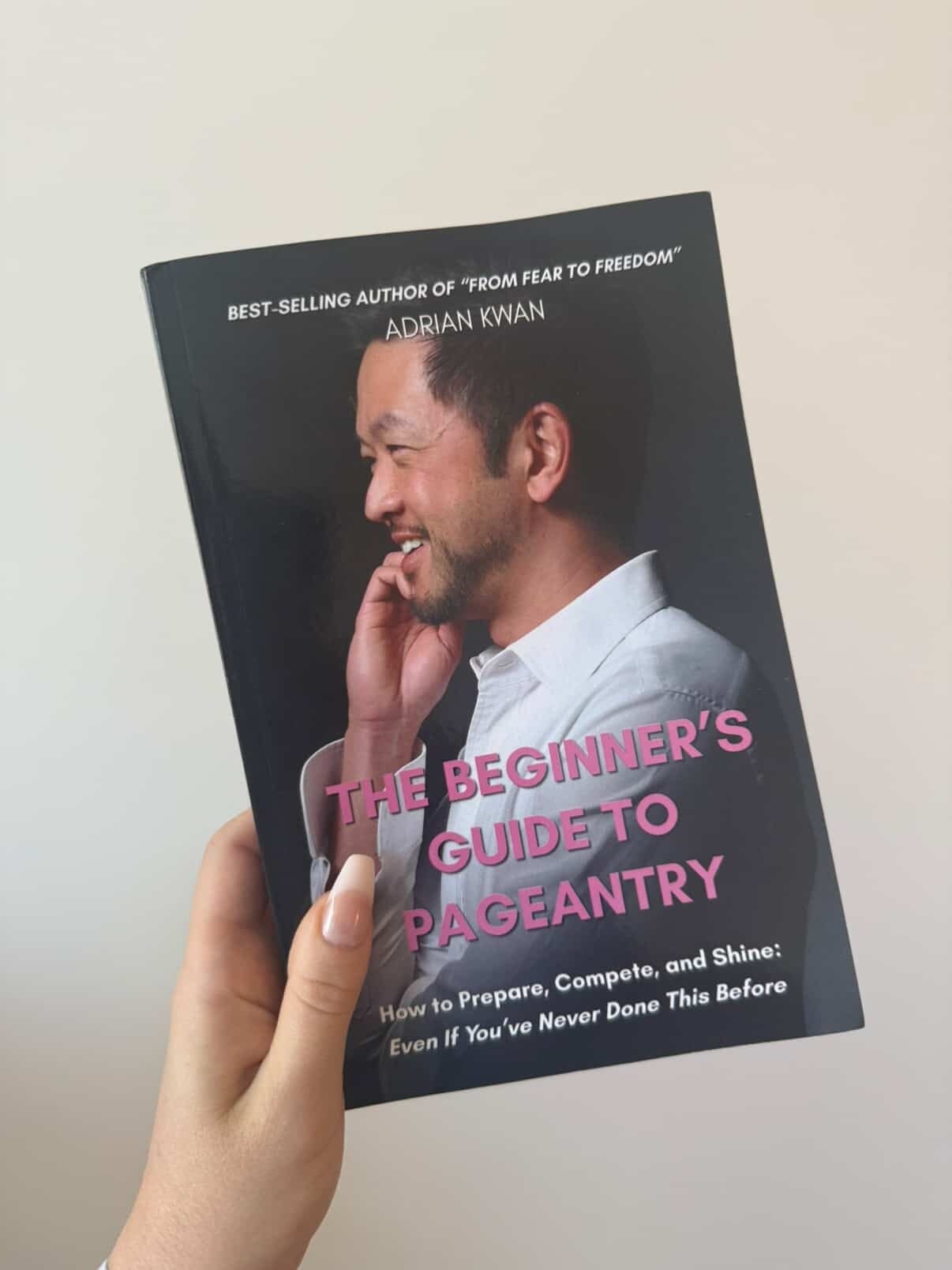
“The Beginner’s Guide to Pageantry” - Everything You Need to Compete in Your First Pageant With Confidence... Even If You’re Starting From Zero: